 Call Us Today! (303) 431-7333
 Celebrating Colorado Pollinator Month
Applewood Seed Company’s trial gardens showcase a diverse array of pollinators
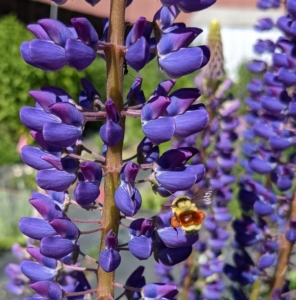
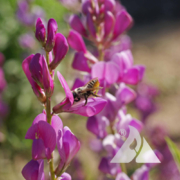
A Hunt’s bumblebee collects pollen from a Perennial Lupine.
As spring turns into summer in the Colorado Rockies, the native pollinators are hard at work collecting pollen and nectar from wildflowers. We at Applewood Seed Company are continuously improving our wildflower varieties to benefit our local Colorado pollinators and other pollinator species across the U.S.
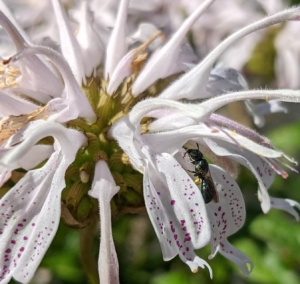
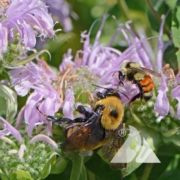
A small carpenter bee sits on Eastern Beebalm.
Our various pollinator seed mixtures provide diverse nutrients for bees, butterflies, birds, moths, and other beneficial insects throughout the year. Highlighting these keystone species is at the heart of Applewood Seed’s vision, and no better place to study the various Colorado pollinators than our own trial gardens located in Arvada, CO.
Native bees, wasps, and other pollinators can be seen buzzing through the penstemons, cinquefoils and asters in our trial gardens.
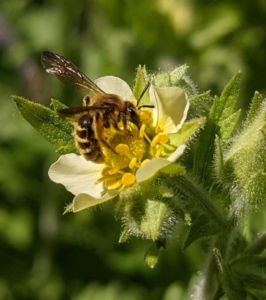
An Andrena sp. of mining bee on a bigflower cinquefoil.
Pictured top left is Bombus huntii, or Hunt’s Bumble Bee happily buzzing away around perennial lupine. You can see that she has collected the orange pollen into her corbiculae or “pollen baskets” on her hind legs. To the right, a tiny carpenter bee (Ceratina spp.) sips nectar from Monarda bradburiana, or Eastern Beebalm.
Down on the bottom left a mining bee investigates a bigflower cinquefoil Potentilla fissa; these native Andrenids often get mistaken for honey bees. Their smaller size, dark wings, and facial fovae (think of them as fluffy eyebrows on the inner margins of their eyes) are just some characteristics that help distinguish them from Apis mellifera, the European Honey Bee.
Identifying bees and other pollinators can be tricky; you can see our Colorado Bee guide below to follow along as bees visit your gardens, nurseries, and reclamation areas. To celebrate Colorado Pollinator Month, consider planting our native or pollinator-oriented mixes such as those recommended below.

Variety Improvement Process of Open Pollinated Flowers
As Applewood specializes in open-pollinated flower varieties, it is important for us to help maintain distinctive traits that can get lost through the repetition of crop seed production over many years. We routinely hand-select and hand-pollinate flower varieties in our isolation tents every season to help maintain variety purity. This is an additional quality assurance […]
3 Ways to Feed Honey Bees and Help Keep Them Healthy
Applewood Seed Company, located in Arvada, Colorado, was established in 1965 and specializes in small to large-scale production of open-pollinated flower seeds. We pride ourselves in our commitment to supplying high quality seed by maintaining diligent standards in field production methods, seed testing, and our research trials. Our research includes flower types and mixes specifically […]
Celebrating Pollinator Month with Seed Mixes for Pollinators
Flowers Seeds for Bees and Butterflies June is Pollinator Month and gardens are buzzing with excitement for the first blooms of the season. Keep your local pollinators fed and happy all season long with specially formulated flower seed mixes for blooms in early, mid, and late season from Applewood Seed Company.